


Microcontrollers: Arduinos, ESP32, PIC
Electronics Reference: Microcontrollers, Sensors, Actuators and Components
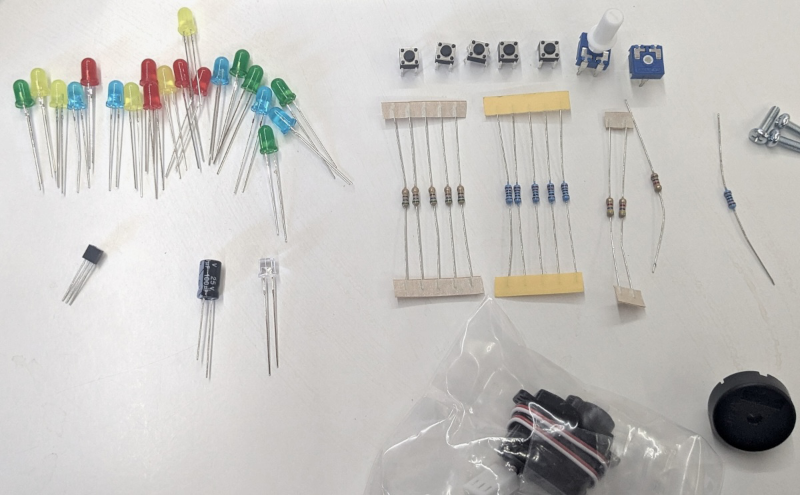
Übersicht über Mikrocontroller, Sensoren, Aktoren und weitere elektronische Komponenten, die in diesen Projekten verwendet werden.
Overview of microcontrollers, sensors, actuators and other electronic components used in these projects.
Aperçu des microcontrôleurs, capteurs, actionneurs et autres composants électroniques utilisés dans ces projets.
Panoramica dei microcontrollori, sensori, attuatori e altri componenti elettronici utilizzati in questi progetti.
Physics Labs Projects
Ultrasound Motion Lab (06/2026)
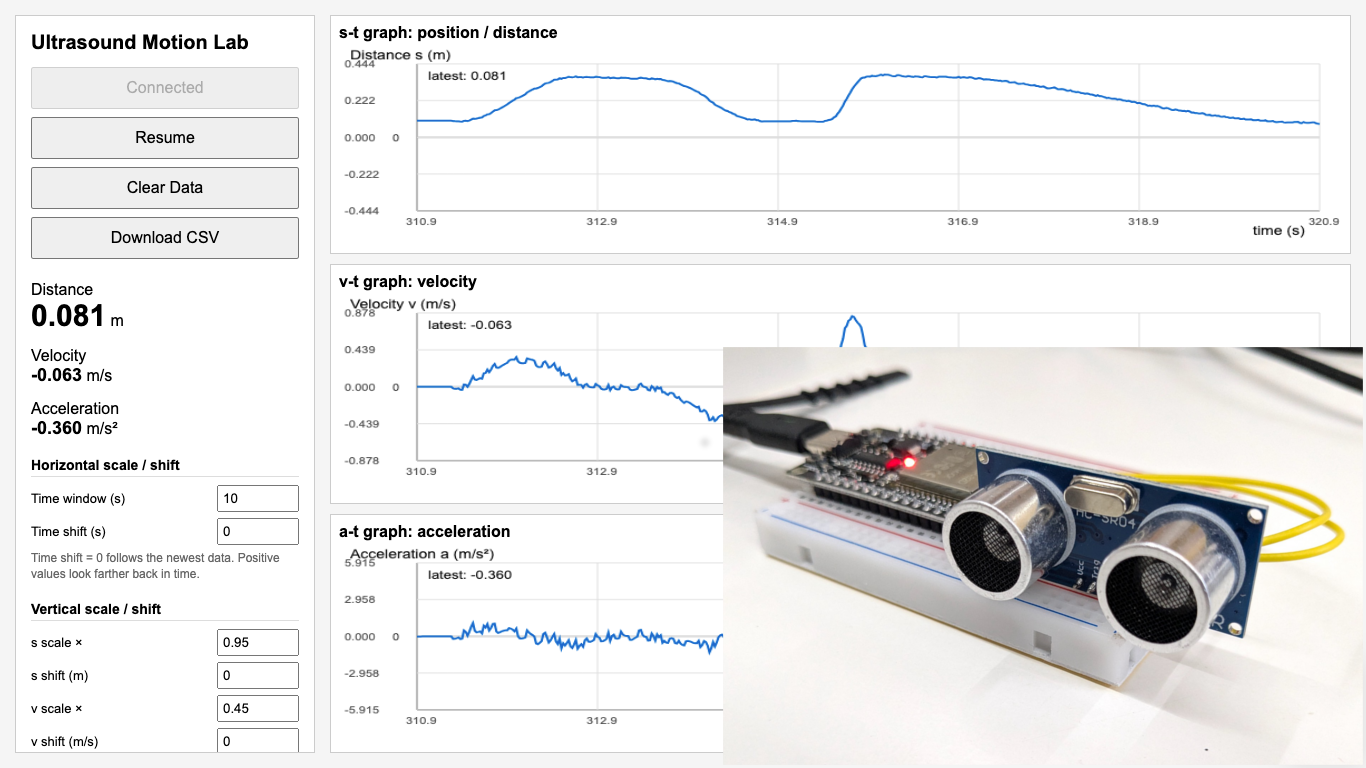
ESP32-basiertes Physikexperiment, das mit einem Ultraschallsensor die Position misst, Geschwindigkeit und Beschleunigung berechnet und die Daten über WebSerial als s-t-, v-t- und a-t-Diagramme in Echtzeit direkt im Browser darstellt.
ESP32-based physics experiment that measures position with an ultrasonic sensor, calculates velocity and acceleration, and displays real-time s-t, v-t and a-t graphs directly in a web browser using WebSerial.
Expérience de physique basée sur un ESP32 qui mesure la position à l’aide d’un capteur à ultrasons, calcule la vitesse et l’accélération, puis affiche les graphiques s-t, v-t et a-t en temps réel directement dans un navigateur web grâce à WebSerial.
Esperimento di fisica basato su ESP32 che misura la posizione con un sensore a ultrasuoni, calcola velocità e accelerazione e visualizza in tempo reale i grafici s-t, v-t e a-t direttamente in un browser web tramite WebSerial.
Train Automation Projects
Closed Feedback Loop Train automation with ESP32, REED Switches, and PWM (08/2026)
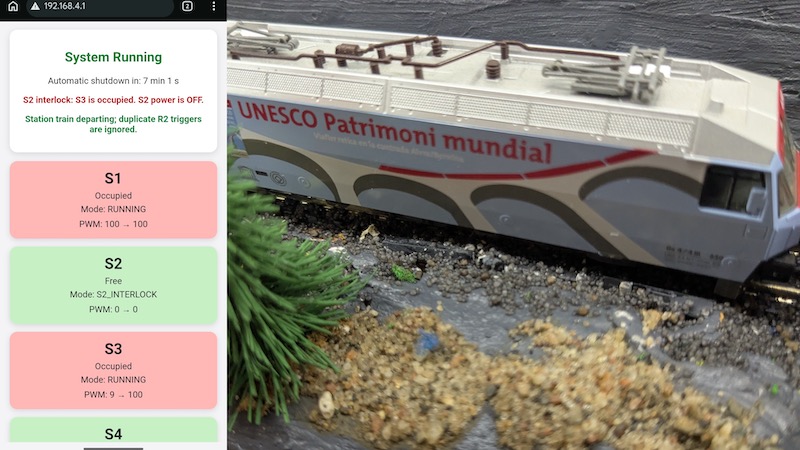
Modellbahnautomatisierung mit geschlossenem Regelkreis: ESP32 als Steuerung, Reedkontakte zur Positionsrückmeldung und PWM für sanftes Beschleunigen und Abbremsen. Zwei analoge Züge fahren auf derselben Schleife.
Closed feedback loop model train automation with ESP32 as the controller, REED contacts for position feedback, and PWM for smooth acceleration and deceleration, running two analog trains on one loop.
Automatisation d'un réseau ferroviaire miniature en boucle de rétroaction fermée : ESP32 comme contrôleur, contacts Reed pour le retour de position et PWM pour une accélération et un ralentissement progressifs. Deux trains analogiques circulent sur la même boucle.
Automazione di un plastico ferroviario con anello di retroazione chiuso: ESP32 come controllore, contatti Reed per il feedback della posizione e PWM per un'accelerazione e un rallentamento graduali. Due treni analogici circolano sullo stesso anello.
Motion Activated Model Train (ESP32 C3 Super Mini) (06/2026)
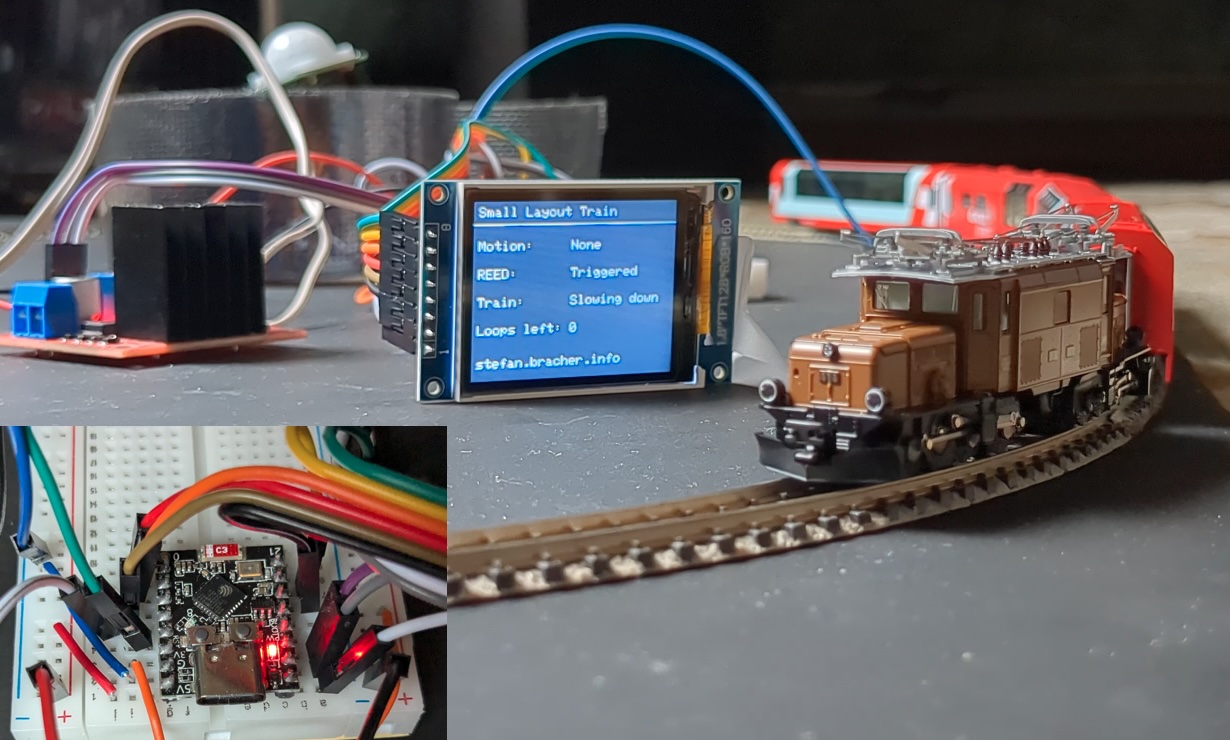
Eine Modelleisenbahn, die automatisch startet, wenn sich Personen nähern, und nach einer einstellbaren Anzahl von Runden (3) selbstständig anhält. Das Projekt verwendet einen ESP32-Mikrocontroller, einen PIR-Bewegungssensor, einen Reedkontakt und ein TFT-Display zur Automatisierung einer Ausstellungsbahn. Wird eine Bewegung erkannt, beschleunigt der Zug, fährt eine vorgegebene Anzahl von Runden (3) und bremst anschliessend automatisch bis zum Stillstand. Das Display zeigt in Echtzeit den Status des Bewegungsmelders, des Reedkontakts, den Betriebszustand des Zuges sowie die verbleibende Anzahl von Runden bis zum nächsten Halt an.
A model train that automatically starts when visitors approach and stops again after a configurable number of loops (3). This project uses an ESP32 microcontroller, a PIR motion sensor, a reed switch, and a TFT display to automate a display train. When motion is detected, the train accelerates, completes a predefined number of loops (3), and then slows down and stops automatically. The display provides live status information including motion detection, train status, reed switch activity, and the number of loops remaining until the next stop.
Un train miniature qui démarre automatiquement lorsqu’un visiteur s’approche et s’arrête après un nombre de tours configurable (3). Le projet utilise un microcontrôleur ESP32, un capteur de mouvement PIR, un contact reed et un écran TFT afin d’automatiser un train d’exposition. Lorsqu’un mouvement est détecté, le train accélère, effectue un nombre prédéfini de tours (3), puis ralentit et s’arrête automatiquement. L’écran affiche en temps réel l’état du détecteur de mouvement, du contact reed, l’état du train ainsi que le nombre de tours restants avant le prochain arrêt.
Un trenino che si avvia automaticamente quando una persona si avvicina e si ferma dopo un numero configurabile di giri (3). Il progetto utilizza un microcontrollore ESP32, un sensore di movimento PIR, un contatto reed e un display TFT per automatizzare un trenino da esposizione. Quando viene rilevato un movimento, il treno accelera, completa un numero predefinito di giri (3) e quindi rallenta fino a fermarsi automaticamente. Il display mostra in tempo reale lo stato del sensore di movimento, del contatto reed, lo stato operativo del treno e il numero di giri rimanenti prima della prossima fermata.
-
YouTube Video
- Poster
-
Source Code (.ino)
Model Train Remote Control by Phone (ESP32) (01/2026)
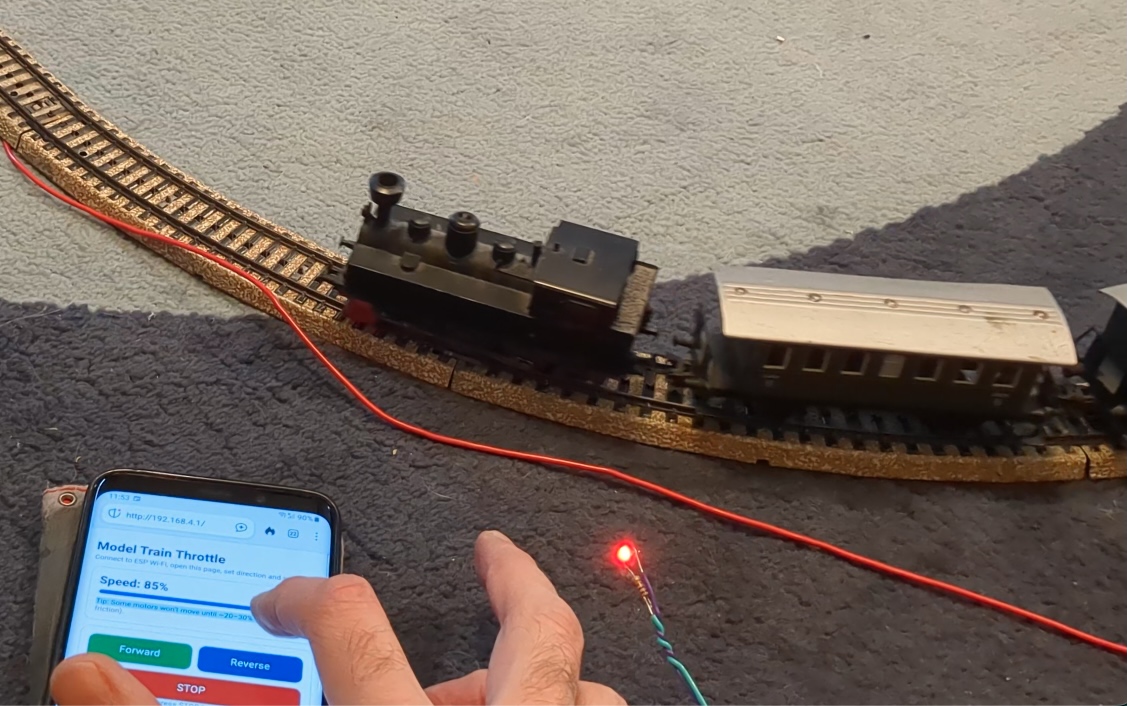
Eine 40 Jahre alte Märklin-Modelleisenbahn per Smartphone fernsteuern – mithilfe eines ESP32-Mikrocontrollers
Remotely controlling a 40-year-old Märklin model train with a phone using an ESP32 microcontroller
Commande à distance d’un train miniature Märklin vieux de 40 ans avec un téléphone, à l’aide d’un microcontrôleur ESP32
Controllo remoto di un trenino Märklin di 40 anni tramite smartphone, usando un microcontrollore ESP32
Train automation with Arduino - Two trains on one loop (03/2025)
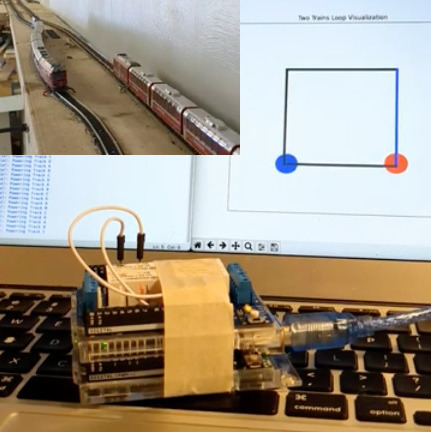
Modellbahnautomatisierung mit Arduino UNO R3 und 4-Relais-Shield für zwei Züge auf einer Schleife mit vier Segmenten. Simulation mit Python. Test auf einer Kato N-Spur RhB-Anlage.
Model train automation with Arduino UNO R3 and 4 Relays Shield for two trains on one loop with four segments. Simulation with Python. Test on Kato N-Scale RhB Train Layout.
Automatisation d'un train miniature avec Arduino UNO R3 et un Shield de 4 relais pour deux trains sur une boucle à quatre segments. Simulation avec Python. Test sur un circuit Kato N-Scale RhB.
Automazione di un plastico ferroviario con Arduino UNO R3 e uno Shield a 4 relè per due treni su un anello con quattro segmenti. Simulazione con Python. Test su un layout Kato N-Scale RhB.
- Youtube Short
- Visualization [mp4]
- Poster (English)
- Arduino Source Code [Control]
- Visualization with Python
Sensors and Data Acquisition
Arduino to Browser: No LCD Needed (WebSerial) (02/2026)
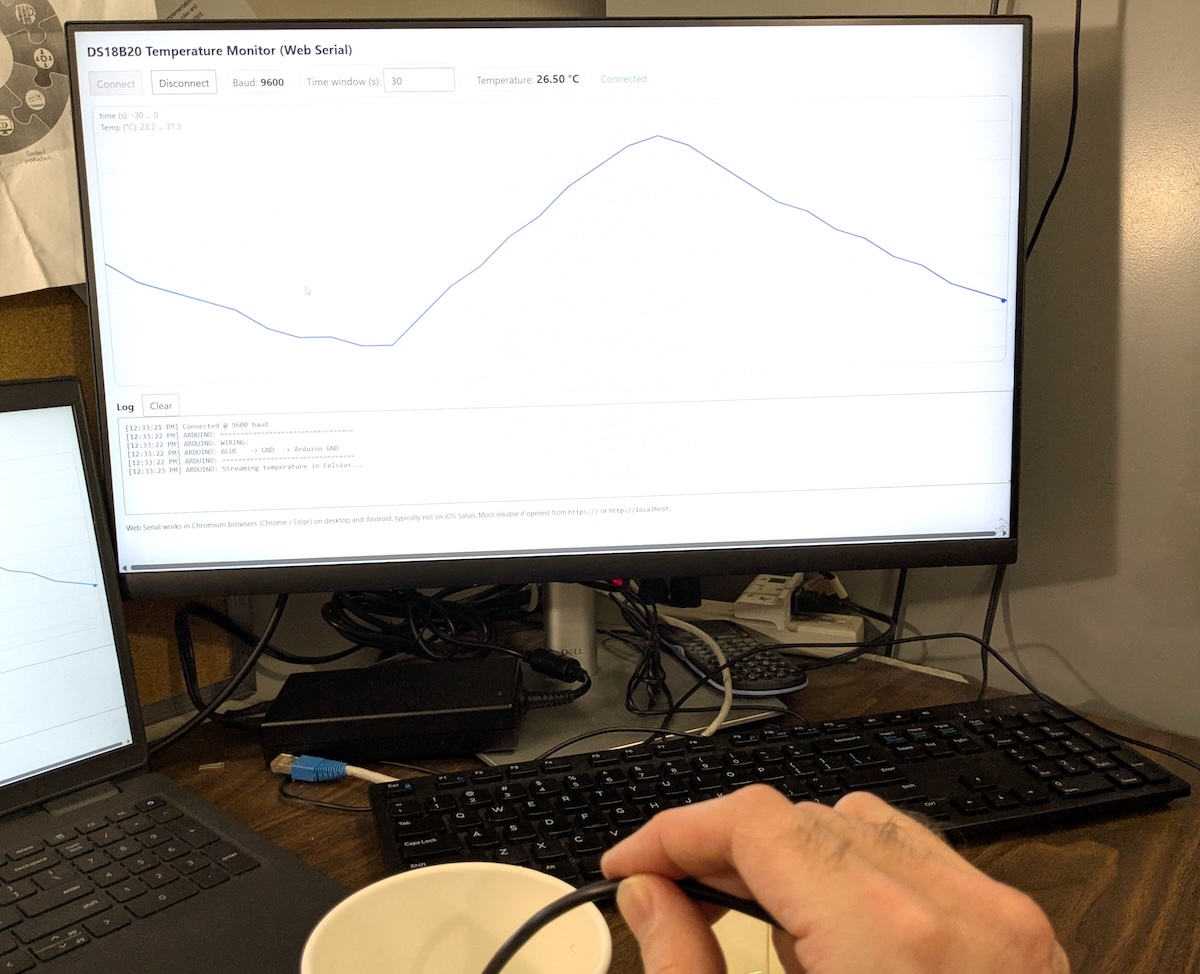
Arduino-Daten direkt im Browser anzeigen – mit WebSerial, ganz ohne LCD, zusätzliche Hardware oder Softwareinstallation
Show Arduino data directly in the browser using WebSerial – no LCD, no extra hardware, no software installation
Afficher des données Arduino directement dans le navigateur avec WebSerial – sans écran LCD, sans matériel supplémentaire et sans installation de logiciel
Visualizzare i dati Arduino direttamente nel browser con WebSerial – senza LCD, senza hardware aggiuntivo e senza installazione di software
DHT22 Temperature and Humidity with Arduino (02/2025)
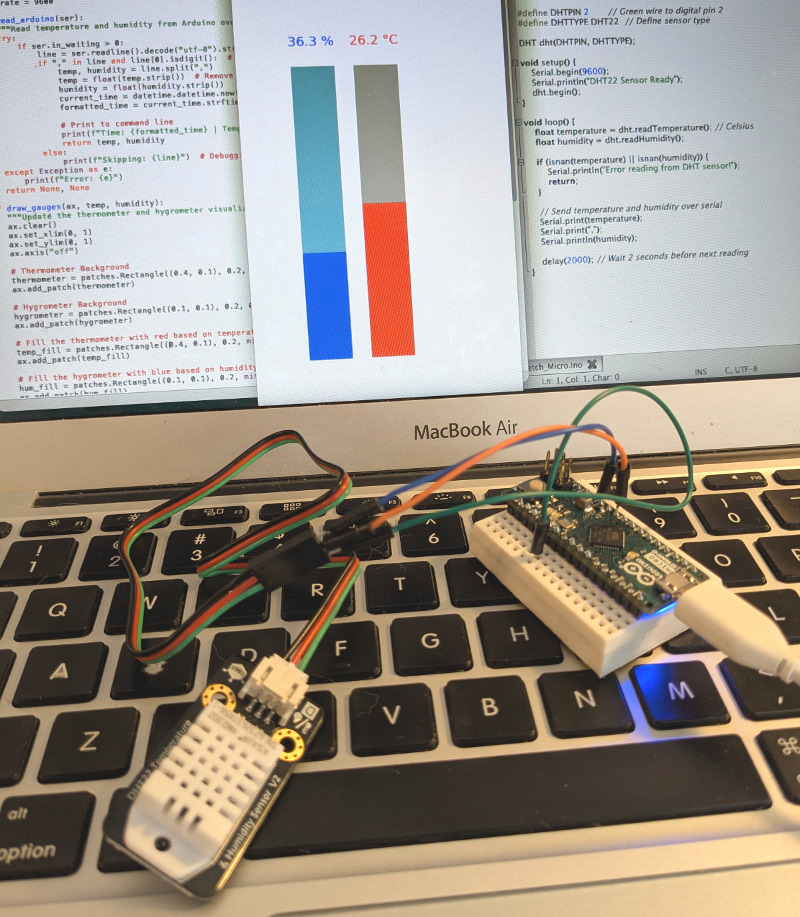
Messung von Temperatur und Luftfeuchtigkeit mit einem DHT22-Sensor und einem Arduino. Die Daten werden seriell an einen Computer gesendet und mit Python visualisiert.
Measuring temperature and humidity using a DHT22 sensor and an Arduino. The data is sent over serial to a computer and visualized with Python.
Mesure de la température et de l'humidité avec un capteur DHT22 et un Arduino. Les données sont envoyées en série à un ordinateur et visualisées avec Python.
Misurazione della temperatura e dell'umidità con un sensore DHT22 e un Arduino. I dati vengono inviati in seriale a un computer e visualizzati con Python.
DS18B20 and LCD Display with Arduino (01/2025)
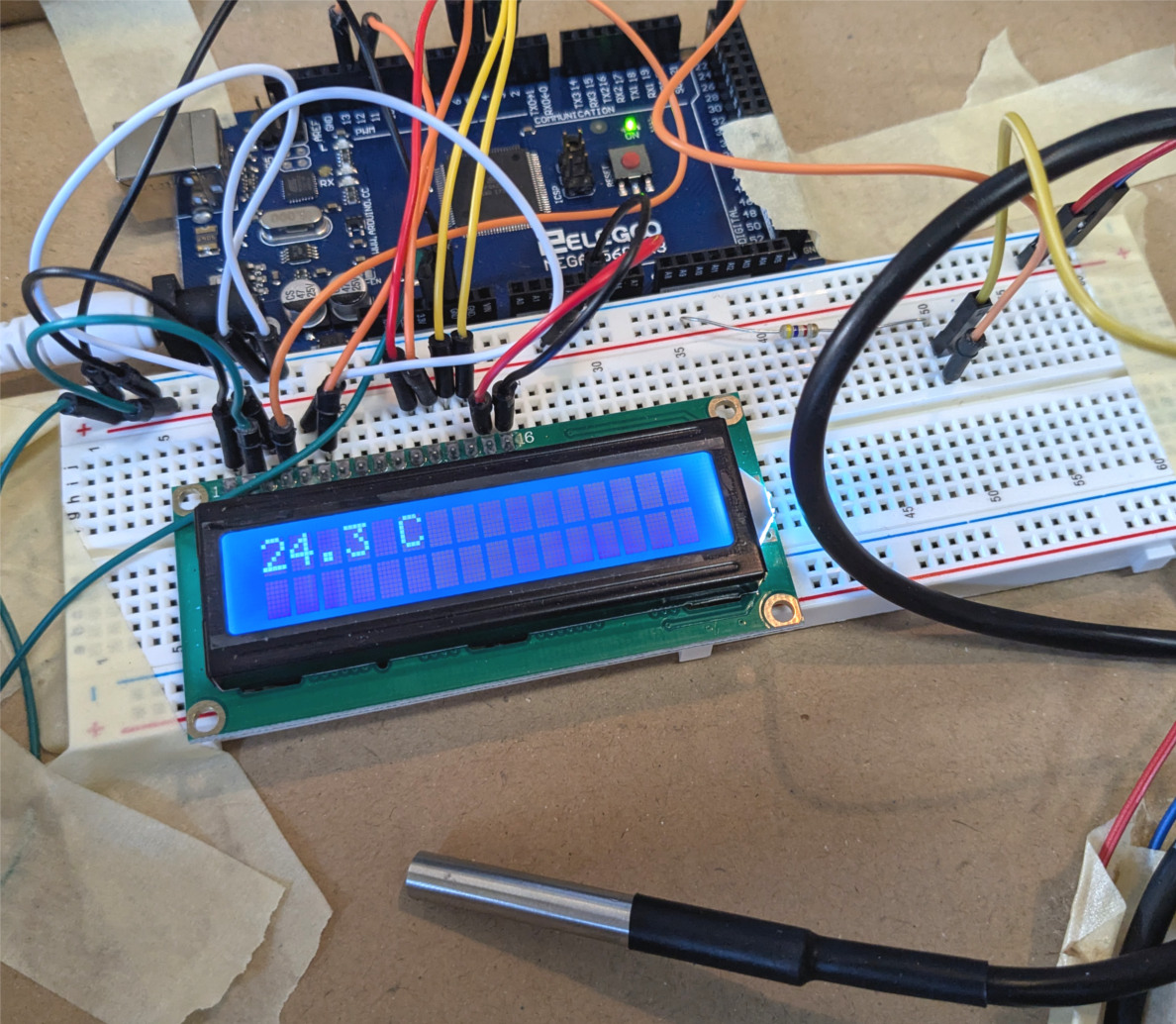
Anzeige der Temperatur eines digitalen DS18B20-Sensors auf einem 16x2-LCD-Display mit einem Arduino. Eine einfache Möglichkeit, Temperaturmessungen in Echtzeit darzustellen.
Displaying the temperature from a DS18B20 digital sensor on a 16x2 LCD display using an Arduino. A simple way to show temperature readings in real time.
Affichage de la température mesurée par un capteur numérique DS18B20 sur un écran LCD 16x2 à l'aide d'un Arduino. Une manière simple d'afficher la température en temps réel.
Visualizzazione della temperatura letta da un sensore digitale DS18B20 su un display LCD 16x2 con un Arduino. Un modo semplice per mostrare la temperatura in tempo reale.
Assembler PIC Projects
1 Channel / 8-Bit parallel ADC using a PIC16F684 (27/02/2007)

Ein ADC für die Konvertierung von einem analogen Eingang zu 8-Bits in parallel.
A one analog channel to 8-Bit parallel Analog-Digital Converter.
Un convertisseur analogique-numérique d'un canal analogique à 8-Bit en parallel.
Un convertitore analog-digitale di un canale analogico a 8-Bit in parallelo.
Push-button light switch with PIC16F684 (28/01/2007)

Einfache PIC16F684 Anwendung zum Ein- und Ausschalten einer Diode mit einem Push-Schalter.
A simple PIC16F684 implementation of a push-button light switch.
Une application simple du PIC16F684 pour la commande d'une DEL à lumière avec un interrupteur.
Applicazione semplice del PIC16F684 per il controllo di un LED con un pulsante.
![Schema [JPG 20.2KB]](files/pic/push_button.jpg)